
Why a $400 Freight Quote Turns Into a $4,000 Bill, and How to Prevent It
More Articles in Our Collection...

Call Us:
800-201-0026
If you’ve ever received a freight quote that was 5–10 times higher than your original estimate, you already know carrier capacity charges are real.
What you may not know is that they’re almost entirely preventable… IF you understand the rules before the carrier arrives at your dock.
This is the most expensive mistake we see in mail-as-freight logistics, and it happens more often than it should.
The Rule Many Shippers Don’t Know: Stack Pallets !!!
Most LTL carriers enforce a maximum handling unit limit per pickup when freight is moving from the same origin to the same destination on the same day. For FedEx, that limit is typically 7 floor positions on the truck.
Exceed that limit — even by one pallet — and the carrier will assess a capacity overage charge on the spot. No warning. No negotiation at the dock. Just a dramatically higher freight bill after the fact.
Here’s the critical distinction most shippers miss:
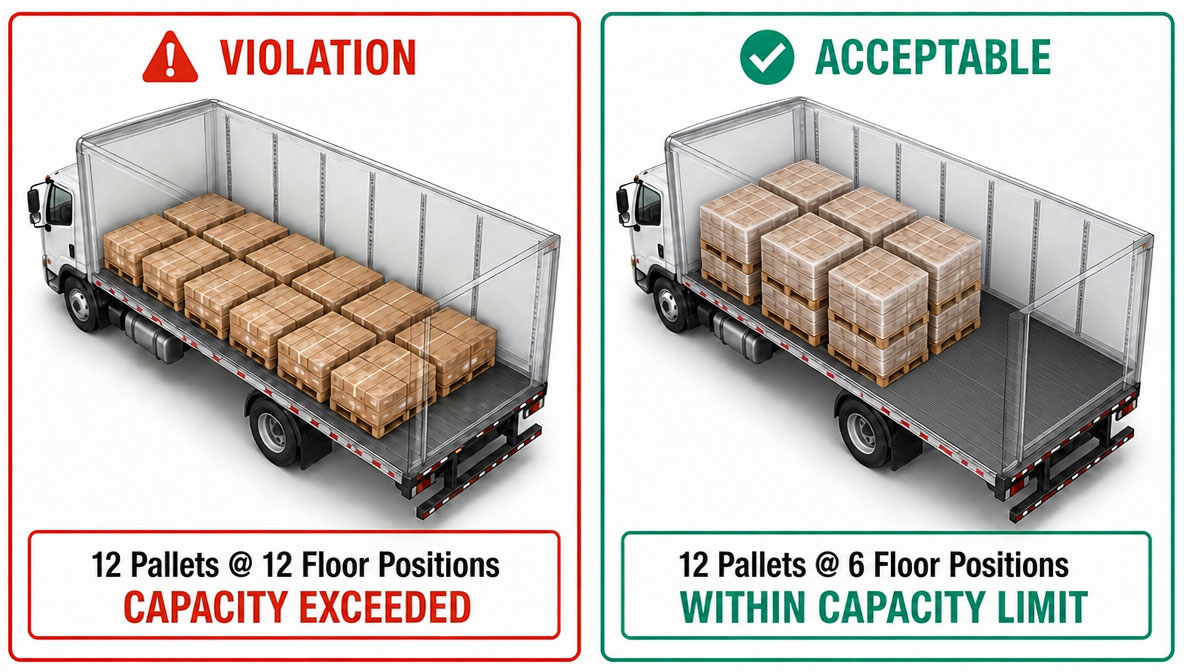
A handling unit is not simply a pallet. It’s a floor position on the truck. Two pallets shrink-wrapped together and stacked count as one handling unit. This distinction matters enormously — and it’s your most powerful tool for avoiding capacity charges.
The Math That Changes Everything
Imagine you have 10 pallets shipping to the same SCF facility on the same day. On paper, that exceeds the 7-unit limit. But if those 10 pallets are stacked into pairs — 5 stacks of 2 — you now have 5 handling units, well within the carrier’s capacity rule. Same freight, same truck, no overage charge.
This is why marking your freight as stackable in DLP is not optional — it’s critical. When you check the stackable designation on your job, that information transmits directly to the carrier with your pickup request. It gives Direct Logistics the documentation needed to make the strongest possible case for charge reversal if an overage is ever assessed.
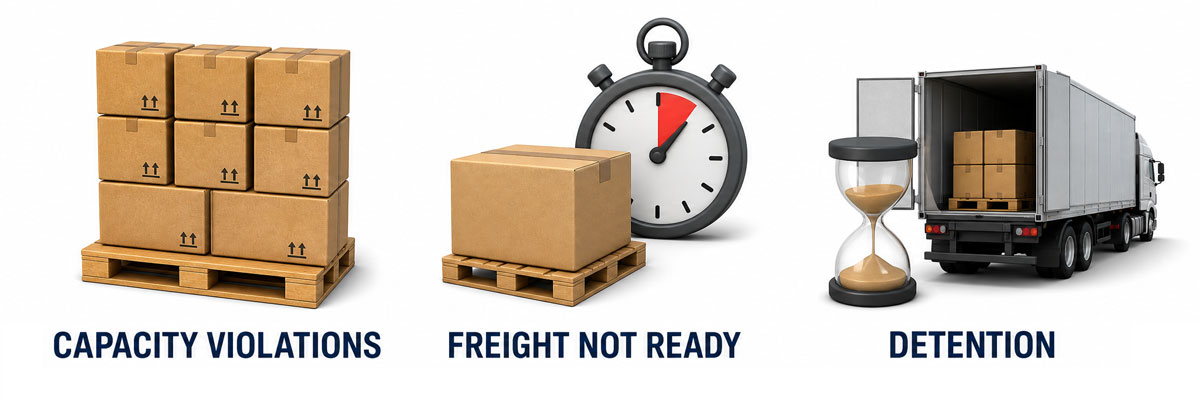
The Three Conditions That Trigger Carrier Charges
Condition A — Capacity Violations (the most expensive)
Seven or more handling units going to the same destination on the same day triggers a capacity overage charge. Same origin, same destination, same day — that’s the trigger. The fix: stack pallets to reduce floor positions, split the shipment, or contact Direct Logistics before submitting the job.
Condition B — Freight Not Ready
Every carrier operates within strict pickup windows — typically 15 minutes. If your freight isn’t staged and ready when the driver arrives, you’ll be assessed a freight-not-ready charge. This one is entirely preventable: stage freight before the pickup window opens, not after the driver knocks.
Condition C — Detention
Carriers allocate a fixed loading window based on shipment weight. When loading runs long, detention charges accumulate fast. Have your dock crew, equipment, and freight ready to load the moment the driver arrives.
Your Last Line of Defense
Before your Bill of Lading is signed, your shipping team should count all handling units going to each destination that day. If any single destination is approaching 7 handling units, act before the carrier arrives:
-
Stack pallets to reduce floor positions
-
Split the shipment across different pickup times
-
Select an alternate carrier with higher capacity limits
-
Upgrade to dedicated truckload
Once the driver is at your dock, your options shrink significantly.
The Bottom Line
If you have 7 or more handling units shipping to the same destination on the same day, contact Direct Logistics before submitting your job in DLP. We’ll work through the most cost-effective solution with you before the carrier arrives — not after.